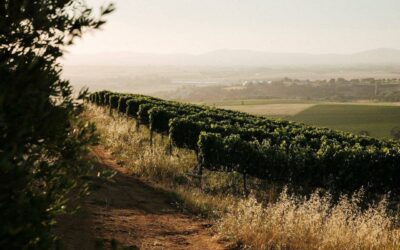
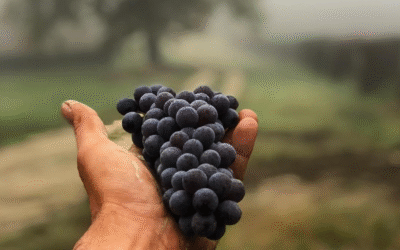
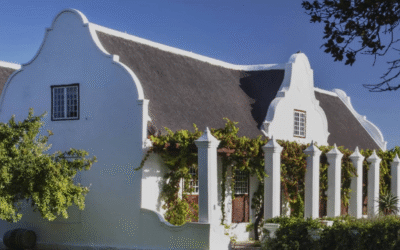
By now the Sadie Family wines need no introduction. They are cutting-edge examples of our most characterful wines that revolutionised the South African landscape and inspired a whole generation of winemakers. Eben Sadie and the team aim to make the most honest wines possible, to focus on and constantly improve their vineyards, thus raising the quality of the grapes and bettering their wines.
The 2017 Columella has less Syrah than previous vintages and will need a good amount of time to show its true potential. It’s certainly the best bottled to date. The refined style now locked down, it is an incredible wine. The Palladius 2017 follows the same simple frame of the last few vintages. Now completely unwooded, it aims to capture the Swartland with its blend of 11 varieties in a similar blend to last year’s. It is one of SA’s best and most complex whites. See the full notes on the new Sadie Family releases below.
Buy the new Sadie wines online >>
The 2017 releases:
‘Our initial feelings and observations of the 2017 harvestwere that the grapes definitely came in with much lower levels of ripeness and acidity; and in general we were of the view that the wines would have a more limited longevity than usual: the new equilibrium suggested simpler wines with a lesser inner core structure and weight. And yet, as the 2017 vintage continued ageing in the casks, clay and concrete vats it became evident that the wines were punching way above their weight.
In
Sadie Family, Columella 2017
This 2017 Columella is the first of ‘the drought years’ to be bottled and this very wine stands as evidence of the great stability to be achieved in a region with multiple varieties and vineyards planted in diverse sites. It shows that the greatest and most stable quality is to be achieved by a selection of vineyards rather than just one. The expression of a singular site has its place, but there is simply no better strategy than the combination of a bigger variety of terroirs to build up the most stable representation of our region. This wine is the result of 12 months ageing in barrels (8% new) and thereafter an additional 12 months in old, big oval casks. This 2017 vintage has incredible tension and density and is very much ‘locked in’. The firmness of the wine suggests that it is a great keeper. It does exhibit amazing herbal, spicy and perfumed aromas and there is more than enough fruit – but it is a highly-strung wine that needs time. The tannins are fine, powdery and almost silky with
To my mind, this is the best Columella released to date.
Sadie Family, Palladius 2017
Palladius 2017 displays the magnitude of layers that is to be expected from a blend of 11 varietals across 17 vineyards, but unlike the previous two vintages there are more fresh fruit flavours and the stone fruit and peach skin aromas almost suggest a cooler vintage… this is in part the result of us picking slightly earlier than usual to try and save plant reserves for the vines to deal with the drought. This wine normally has more tropical aromas, but this year there is none of that to be found. Some white cassis and green apple skin make up a very restrained version with salty, mineral and slight honey and lime undertones. – Eben Sadie
A blend of Chenin Blanc, Grenache Blanc, Marsanne, Sémillon, Sémillon Gris, Viognier, Clairette Blanche, Roussanne, Verdelho, Colombard and Palomino! A masterful wine with brooding white stone fruit, fynbos spice and a sense of quiet concentration on the nose. The palate is focused, super complex and clearly still very young. 2018, as was 2017, is a finely tuned expression of Swartland fruit where the sunnier varieties like Viognier, Marsanne, etc. are reined in whilst the more reductive varieties like the Pallamino, Clairette, etc. are given a bit more breathing space leading to a super complex wine with many pieces to a puzzle that require cerebral engagement. One of SA’s finest whites. – James Pietersen
The 2018 releases:
‘With the 2019 vintage now being in the tanks and casks, the reality is that we have lost an entire year’s production over the past three years, with average production levels being down with 28% – 35 %. In other words, apart from having to deal with an economical reality, there is a massive shortage of wine, especially as far as the Old Vine Series is concerned. Luckily for Columella & Palladius we could add a vineyard to each one of the two over the past two years and this has been of great help.
As was the case in 2017, the 2018 harvest came in with much lower levels of ripeness and acidity and the more towards the north the vineyard lies, the harsher the effect of the drought. The Clanwilliam Mountains were hit the worst, followed by Piekenierskloof and the Piquetberg respectively. The vineyards in the Paardeberg and Kasteelberg in Riebeek did slightly better in 2018.’– Eben Sadie
Sadie Family, Soldaat 2018
For no other reason than the higher altitude, the 2018 Soldaat actually held up quite well in comparison with many other vineyards. This year the fruit is extremely restrained and bright: almost like barely ripe pomegranates and cherry flavours. The bright red fruit is very much underplayed with an earthy and meaty mouth feel and it is clearly one of those vintages that, in time, will develop forest floor characters. Currently this wine is very restrained. – Eben Sadie
Grenache Noir from Piekenierskloof planted at 708m in the 1970s. 2018 is lighter in style and walks a fine tightrope between freshness and structure. Fresh, bright and pretty with wild strawberry and florals leading to a fine-grained, tannic grip. Fermented and raised in concrete this ensures a wine that is fresh and lively but give it a year to settle. – James Pietersen
Sadie Family, Pofadder 2018
We picked the Cinsaut grapes in the Pofadder vineyard quite early again. Cinsaut has big berries and only minor dehydration leads to shrivelling and jam flavours. This is the most refined version we have bottled to date and seems to be the wine that will need the longest time to develop. The strawberry and unripe cherry flavours are dominating the aromas currently, but the texture and mouth feel is very elegant on the palate, with the usual tannin backbone which is typical of Cinsault. It is a very serious wine. – Eben Sadie
100% Cinsaut from the western side of the Kasteelberg in the Swartland, made from 50+-year-old vines. Eben believes Cinsaut is one of SA’s best red grape varieties. Elegant in style with Pinot Noir-like tannins, it is firm but silky with fresh, vibrant acidity.
Sadie Family, Treinspoor 2018
Over the past number of years the Treinspoor has in many ways become one of our most rewarding wines, for it has gone through an incredible process of refinement. The biggest attraction with Tinta Barroca is the fact that it can also produce super elegant aromas and purity, but with much more layering of tannins and texture on the palate. It is generally the most serious of the Old Vine reds that we bottle and the 2018 is not any different. However, this is in many ways the most balanced and harmonious wine we have bottled from this vineyard. The yield, unfortunately, was very small. –Eben Sadie
Made from 47-year-old Tinta Barocca grown west of Malmesbury. The darkest and most serious of the Sadie reds, this is a wine of power – deep fruited with tight tannins that will need serious time in bottle.
Sadie Family, Mev. Kirsten 2018 (Very limited)
Being the oldest of our Old Vine vineyards, this vineyard has had the benefit of time and much work; and also being situated in Stellenbosch with
This revived Chenin block at the foot of Botmanskop was planted in 1920 and it’s SA’s oldest Chenin block.
Sadie Family, Skerpioen 2018
From the outset the limestone soils of this vineyard
70+-year-old Chenin blended with Palomino from Dwarskerbos and Elands Bay. This wine speaks of an arid place that is home to some of our most complex soils. A remarkable wine that always has a saline, crushed stone undercarriage to foil the ripe, concentrated nose. 2018 shows off with ripe, pure fruits like dried pineapple and follows through to a fine, breezy palate that is chalky and firm with a stunning focus. As always, it is one of my favourites. – James Pietersen
Sadie Family, Skurfberg 2018
The Skurfberg up in the Clanwilliam mountains was definitely the area most affected by the drought. Not only did these vineyards receive less rain, but with half the normal rainfall and the extremely well-drained, decomposed Table Mountain sandstone soils the combination was just suicidal. We only managed to pick 30% of the grapeswe collect in a normal year. The wine is unbelievably harmonious and poised and it actually does not show much of the drought other than a slightly lower alcohol level and a higher acidity than normal – we picked earlier to try and save as much of the vine reserves as we could. Drinking this wine is the closest we’ll probably get to walking on crystal. – Eben Sadie
100% Chenin Blanc planted in the 1950s in the Skurfberg Mountains in the Olifants River region. This is possibly SA’s finest vineyard but it’s heavily affected by the drought. Remarkably open on the nose with orange blossom, citrus, spice and crushed pebbles leading to a beautifully concentrated palate with a rich and balanced finish cut by fine, natural acidity. 2018 is a touch rounder and richer than the last couple of releases. It is delicious with a slight tannic grip that adds firmness to the finish. – James Pietersen
Sadie Family, ‘T Voetpad 2018 (Not available)
The ‘T Voetpad vineyard also followed the same trajectory as the Kokerboom as far as the production numbers are concerned, but here it was not on account of the soils being too drained, for the Voetpad vineyard is situated at the bottom of a mountain with some sub-soil moisture from a nearby river and underground draining. It was simply a case of very little fruit that set during flowering: a reality of a period of ongoing drought; and some vines actually died. In 2019 we will do a replanting in the vineyard and replace the vines that could not make it through. The 2018 wine stayed true to its normal character and we managed to produce one of our star wines from this parcel again. Production numbers are very, very limited. – Eben Sadie
A field-blend on the north-west side of the Piquetberg Mountains first planted in 1887, making it SA’s oldest vineyard. Sémillon is the star of the show, blended with Sémillion Gris, Palomino, Muscat and Chenin. There is a seamless balance to this wine as if it is all of the same
Sadie Family, Kokerboom 2018 (Not available)
The Kokerboom vineyard is even better drained than the Skurfberg vineyard, thus the same effect was in place… just in an accentuated way. The result was that we actually had to pick the grapes as soon as we could. Compared to the Chenin Blanc variety in the Skurfberg, which does not seem to be so clearly marked by the picking date, the earlier picking of the Kokerboom Semillon Blanc and Semillon Gris brought about a marked difference: for the first time ever we picked up some herbaceous and green flavours that are not usually part of the character of this wine. We opted to pick that early in order to save the reserves in this vineyard, which was our most affected one. Our suggestion is to at least age the 2018 Kokerboom for 5 years to just get things to settle down. We produced less than 30%of the usual production, so there is not much to go around and unfortunately there is nothing we can do about it. We tried our absolute best. – Eben Sadie
Sémillion Blanc and Sémillon Gris from Trekpoort Kloof in the Olifants River region. The 90+-year-old vineyards have stood the test of time. Picked earlier than usual due to the tough vintage conditions in 2018. It is very different from previous releases with adistinct cool, herbal note. A wine that clearly shows the constraints of the vintage. – James Pietersen